
How to Get Rid of Small Cockroaches: From the Eggs to the Last One in Your Kitchen
How to get rid of small cockroaches for good: spot German cockroach eggs, place gel bait and boric acid the right way, and follow a one-month kitchen plan.
 Ministry of Health licenceLicence 32 · Reg. 90🔍 Tap to enlarge
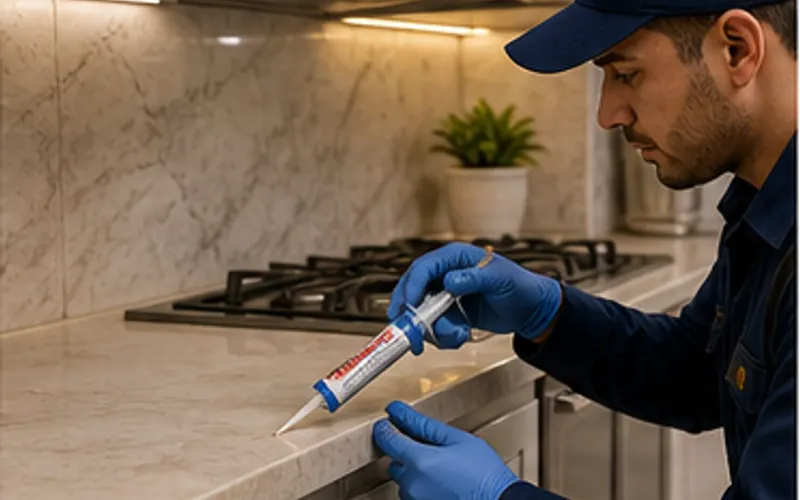
Most small cockroaches running around kitchens in Egypt are German cockroaches. To get rid of them for good you need gel bait in the cracks where they hide, no water or grease left out for them, and about a month of follow-up to catch the young that hatch later. Spraying alone won’t do it: the eggs sit in a sealed capsule that the female carries until they are almost ready to hatch.
What kind of small cockroach is this?
In Egyptian homes there are really only two candidates.
The usual one is the German cockroach. An adult is only about 1.5 cm long, light brown with a yellowish tint, with two dark stripes running side by side just behind the head. It has wings but almost never flies. It runs.
Its young (nymphs) are darker, nearly black and wingless, with a pale stripe down the back. Tiny black ones running alongside light-brown adults are one family.
The other candidate is young American cockroaches, the big reddish-brown ones from the drains. Their nymphs are reddish brown with no clear stripes, and you see them around bathroom and kitchen floor drains or in the light well.
A quick test: if the small ones stay inside kitchen cupboards and behind the fridge, and you never see a big one with them, it’s almost certainly German. If they gather around drains and a big one climbs out of the sewer now and then, they are American. Older Cairo buildings often have both. For more on the species and how each is treated, see our article on cockroach extermination.
German vs American cockroach at a glance
| Feature | German cockroach (small) | American cockroach (large) |
|---|---|---|
| Adult size | About 1.3 to 1.6 cm | About 3.5 to 4 cm, sometimes larger |
| Colour | Light brown, two dark stripes behind the head | Shiny reddish brown with a pale yellowish band around the neck area |
| Where it lives | Indoors: kitchen, behind appliances, cupboard hinges | Sewers, floor drains, light wells, manholes, basements |
| Eggs | Female carries the capsule until close to hatching | Female drops the capsule or glues it in a hidden corner after a day or two |
| Eggs per capsule | About 30 to 40 | About 14 to 16 |
| Time to hatch | About 3 to 4 weeks, depending on temperature | Longer, about 6 to 8 weeks |
| Flying | Very rare | Flies short distances, especially in hot weather |
| Best treatment | Gel in cracks plus follow-up | Treating drains and sewers, sealing openings |
So the German cockroach is treated inside the flat, while the American one keeps visiting from the sewer if the drains stay open.
Where do small cockroaches come from, and why the kitchen?
“The house is clean, so where did they come from?” We hear it all the time. German cockroaches rarely come up the drain. They get carried in:
- In grocery and supermarket cartons, especially ones stored in an infested warehouse.
- In second-hand appliances: microwaves, fridges, washing machines, even coffee machines. A warm motor is an ideal home.
- With furniture during a move, or in bags from an infested workplace.
- From neighbours, through gaps around water and waste pipes, along electrical conduits and under doors. If your neighbour sprays something strong, they may move to you.
Inside, they want warmth, water, food and a narrow crack. A kitchen has the lot: a warm fridge motor, a damp sink with an unnoticed leak, grease on the cooker, and hinges and joints to hide in.
German cockroaches cope with hunger far better than thirst. Fixing a dripping tap and drying the sink before bed matter more than you’d think.
When the kitchen fills up, they spread to the bathroom and sometimes the bedrooms: behind picture frames, inside the Wi-Fi router, in extension sockets.
Cockroach eggs: what they look like, where they are, when they hatch
What small cockroach eggs look like
Cockroach eggs are packed into a single capsule called an ootheca. The German cockroach’s capsule looks like a tiny rectangular purse, light brown, with fine crosswise ridges like little compartments, under a centimetre long.
A female may walk about with the capsule sticking out of her rear like a bead. If you kill one, bin the capsule outside in a sealed bag.
The American cockroach’s capsule is much darker, nearly black, harder and shaped like a small seed. The female drops it or glues it somewhere hidden.
An empty capsule is split open along the top and paler. Lots of empty ones mean earlier generations have already hatched.
How to find where cockroach eggs are
With German cockroaches you rarely find full capsules lying around, since the female keeps hers almost to the end. You find the colony’s living spots instead, with empty capsules, nymphs and droppings. Check:
- Cupboard door hinges, top and bottom.
- Behind and under the fridge, next to the motor.
- Under the sink around the pipes, and inside that cupboard.
- The worktop-to-wall joint, and behind the cooker.
- Inside small appliances: microwave, coffee machine, router.
- The kickboard under the kitchen cabinets.
Look at night: leave the kitchen dark for two hours, then walk in with a torch. The ones that run show you where they hide.
For American cockroaches, look for dark capsules in hidden corners near drains, under the sink, on the balcony and in cartons kept somewhere damp.
When do cockroach eggs hatch?
A German cockroach capsule holds 30 to 40 eggs on average. The female carries it for about 3 to 4 weeks and drops it a day or so before hatching. Heat shortens this; cold lengthens it.
The nymphs shed their skin as they grow and start breeding after about two months, sooner in summer. One female produces several capsules in her life. That is why complaints about cockroach eggs peak from June to October.
American cockroach capsules take about six to eight weeks, and the young grow far more slowly.
What kills cockroach eggs, and why doesn’t spray reach them?
The capsule’s hard shell protects the eggs from most sprays. And with German cockroaches it is tucked into the crack with the female, so the spray never touches it.
Worse, a female killed while carrying a capsule close to hatching still releases her young.
What actually kills the eggs:
- Vacuuming capsules and nymphs out of cracks, then emptying the bag or canister outside straight away.
- Crushing any capsule you find.
- Very hot steam on dry surfaces and cracks, away from electrics.
- Insect growth regulators, used by pest control technicians, which stop the young maturing and breeding.
At home, don’t chase every capsule. Keep fresh gel in place when the nymphs hatch, so they eat it and die before they breed. That is breaking the cycle, and it is how our cockroach control service works: gel in the cracks, then a return visit a few weeks later for the hatched generation.
Cockroach droppings and signs of infestation
What cockroach droppings look like
German cockroach droppings are tiny black specks, like finely ground coffee, clustered at the entrance to a hiding place: a top cupboard corner, beside the hinges, along the edge behind the fridge. On vertical surfaces they can show up as small brown smears.
American cockroach droppings are bigger: small cylindrical pellets with blunt ends and faint ridges along the sides. Mouse droppings are usually larger with pointed ends.
Other signs not to ignore
- A stale, oily smell in a cupboard or under the sink as numbers grow.
- Empty light-brown skins shaped exactly like a cockroach, shed by growing nymphs.
- Empty capsules split along the top.
- Small dead cockroaches in drawers.
- Cockroaches out in broad daylight, which means the hiding places are full.
How to measure the infestation yourself
Put sticky traps behind the fridge, under the sink and by the cooker for three nights and count the catch. Repeat weekly as your benchmark.
Cockroach droppings and shed skins can trigger allergies in some people. If you have a severe reaction or inflammation, see a doctor.
A one-month plan to get rid of small cockroaches for good
This plan is for German cockroaches in an ordinary flat. Expect four weeks, or up to six for an old infestation. Don’t stop halfway.
-
Night one: inspect and count. Do the torch round, note the hiding places and set sticky traps for three nights. Write the number down.
-
Day two: deep clean before any insecticide. Empty the cupboards under the sink and beside the cooker, degrease the cooker, the wall behind it and the hood, and vacuum cracks and hinges, taking the bag outside. With no crumbs around, cockroaches go for the gel.
-
Same day: cut off water. Fix dripping taps and leaking joints under the sink. Dry the sink and worktop before bed and cover floor drains. No dirty dishes overnight, and don’t leave the cat’s bowl full until morning.
-
Get rid of cartons. Cardboard is shelter and food in one. Keep groceries in sealed plastic or glass containers, and empty and check new cartons outside before they come into the kitchen.
-
Apply the gel. Many small dots beat a few big ones. Put them inside hinges, in upper cupboard corners, behind and under the fridge, around the sink pipes and along the worktop-to-wall joint. Details are in the next section.
-
Powder only in dry, enclosed spaces. If you use boric acid powder, dust a very thin layer under the kickboards and behind fixed appliances, away from moisture and food.
-
Week one: don’t spray anything. Seeing more cockroaches in the first days is normal; ones that ate the gel come out as they die. Spraying now drives the rest off the gel. Check it every 3 or 4 days and replace eaten dots.
-
End of week one: count again with traps in the same places. You should see a clear drop. If not, the gel is probably in the wrong spots, other food is competing with it, or someone sprayed nearby.
-
Week two: follow fresh droppings. New droppings mean a hiding place you haven’t reached, so put gel there. Start sealing gaps around pipes coming through the wall with silicone or filler to stop newcomers from next door.
-
Weeks three and four: the hatching wave. The capsules the females carried hatch, and tiny black nymphs appear. Don’t change the plan. Renew the gel everywhere even if it looks fine, because it dries out and stops attracting them.
-
End of the month: seal the kitchen cracks. Once numbers are very low, seal cracks inside cupboards and along joints with silicone. Seal them at the start and the cockroaches still inside just move deeper.
-
Weeks five and six: confirm. The traps should stay empty two weeks running. If they do, leave a few gel dots in key spots as monitoring and count once a month. If you’re still catching cockroaches, switch to a gel with a different active ingredient, or get someone in to inspect.
Our article on cockroach control explains the same logic in more detail: the strength of the product matters less than keeping the treatment in place until the last generation has hatched.
Cockroach gel bait and powder: how to use them properly
Cockroach gel or paste
Gel in a syringe is your strongest tool against small cockroaches. It is food they like with a slow-acting poison inside: the cockroach eats, goes home and dies there, and others nearby are sometimes affected through its droppings.
How to apply it:
- Dots the size of a lentil or smaller. Lots of small dots beat one big blob.
- Inside the crack or on its edge, not in the middle of an open worktop.
- Away from surfaces you wipe daily, or the cloth will take it off.
- Away from direct heat. Next to the oven is fine; on its hot body, the gel dries out.
- Never on a surface just cleaned with a strong-smelling product or sprayed with insecticide. Cockroaches won’t go near it.
- Around and under electrical appliances, not inside them.
When to replace it:
Check every few days. Replace eaten dots and any that have dried hard. If the cockroaches are still about after a few weeks but ignore the gel, switch to a different active ingredient (printed on the pack), not just another brand of the same one.
Safety for children and pets:
A small child can still put a hand on even a tiny dot. Use high spots, deep cracks and the space behind heavy appliances. With a crawling baby or a cat that gets into cupboards, use closed bait stations low down and keep gel for high places. Wash your hands afterwards and lock the syringe away.
Boric acid powder
Boric acid is sold in pharmacies and at traditional herbalists (attar shops). It does kill cockroaches, slowly, over several days: it sticks to their legs and they swallow it while grooming.
The classic mistake is piling it up. Cockroaches walk around a pile, not through it. Use a barely visible layer in dry, enclosed places: under kickboards, behind fixed appliances, in the gap where a pipe enters the wall. Moisture makes it clump, so not under a wet sink.
Never put it on the worktop, near food, or where a child or pet can reach it. Boric acid isn’t safe to swallow.
Homemade boric acid mix
The well-known recipe is boric acid with icing sugar and flour; some add boiled potato or powdered milk. Knead it with a little water and roll it into small pellets. It works to a degree, and cockroaches do eat it.
But it dries out within days, attracts ants and looks like food, a risk with children. Put it in bottle caps in high cupboards, replace it often, and treat it as a helper: it won’t match a registered gel.
Cockroach and ant products from the pharmacy and supermarket
Supermarket shelves are full of products for cockroaches, ants and crawling insects. Here is what each type is good for.
Ordinary sprays kill on contact but miss the cracks and the eggs, and push small cockroaches deeper. Use them for a single stray, never near gel. Our article on small cockroach control explains why spraying alone fails with small cockroaches.
Gel in a syringe suits German cockroaches best, as covered above.
Closed bait stations are safer with children around. They help with a light infestation or alongside gel, but usually aren’t enough alone for a heavy one.
Powder, boric acid or ready-made insect powder, is for dry voids only.
Sticky traps are for monitoring, not treatment. They won’t wipe out a colony.
Foggers and smoke bombs are the worst choice. The product settles on open surfaces, not in cracks, and the cockroaches escape into the walls or next door, then return. It leaves residue on dishes, and some types are flammable near a gas flame or water heater.
One product for cockroaches and ants?
A “cockroaches and ants” spray kills both on contact, with the usual spray problems. Baits differ: the two don’t always like the same food, and ants sometimes swarm over cockroach gel and eat or cover it first. If you have both, treat each its own way and put gel where ants don’t walk. If ants are the bigger problem, see our ant control service.
Cockroach treatment from the pharmacy
Pharmacies usually stock boric acid powder and sometimes cockroach gel, both fine used as described above. Whatever you buy, check that the pack shows registration details, directions and an expiry date in Arabic. One firm warning: never use unlabelled agricultural pesticides indoors. They are made for fields, not closed rooms with food and children, and nobody knows what’s in an unlabelled bottle or how strong it is. Don’t mix two products to “boost” them, and never use kerosene or petrol anywhere in the home.
Home remedies: what works and what only repels
Vinegar doesn’t kill cockroaches. The smell may keep them off one spot for a while. Its real use is cutting grease on the worktop and cooker so they have less to eat. Clean with it, but don’t wipe it over your gel spots.
Mint, peppermint oil, bay leaves and cloves are short-lived repellents at best. A cockroach skips the smelly corner for the one next to it.
Salt does nothing to cockroaches.
Baking soda with sugar is hugely popular, but there’s no good evidence it works like boric acid does. Boric acid is far better.
Hot water down the drain helps briefly with American cockroaches, and does nothing for German ones.
Home measures that do work:
- A vacuum cleaner pulls nymphs, capsules and droppings out of cracks in minutes, cutting numbers fast before you start the gel.
- A steam cleaner kills cockroaches and eggs it reaches on dry surfaces. Keep it away from electrics.
- The boric acid mix above, used with care.
- Shutting off every water source at night.
Never mix bleach with cleaners such as ammonia (it releases a dangerous gas), and keep kerosene, petrol and agricultural pesticides out of the house. None kills the eggs, and all of them hurt you first.
Mistakes that bring cockroaches back
We see these again and again in homes that have tried everything and ended up back at square one:
- Spraying on or next to the gel, which contaminates it and drives cockroaches off it.
- Stopping as soon as numbers drop, right before the hatching wave.
- One big blob of gel in one place.
- Gel on the worktop or anywhere wiped daily.
- Foggers or smoke bombs that scatter cockroaches until they return.
- A dripping tap, a wet sink or dirty dishes overnight.
- Groceries stored in cartons in the kitchen.
- Treating the kitchen but not the bathroom, or your flat when the problem comes from the building.
- Using the same gel for months after they’ve stopped eating it.
- Bringing in a used appliance or cartons without checking.
- Sealing every crack on day one while cockroaches are still inside.
If you’re doing three or four of these, that is likely why the problem persists.
When do you need a pest control company?
The plan works for a light or moderate infestation in a flat. Call a professional when:
- You see cockroaches in daytime and in bedrooms, so the hiding places are full.
- You’ve followed the plan for five or six weeks and the traps still catch.
- They are inside appliances, wall cavities or wiring.
- You run a restaurant, café or food shop and need treatment that doesn’t stop service.
- The whole building is affected, or large sewer cockroaches appear alongside the small ones.
- There are young children or an elderly person at home and you’d rather not handle the products.
- You’ve just moved and want the flat treated empty, before the furniture arrives.
A technician inspects places you can’t reach, identifies the species and source, rotates gels with different active ingredients and, for heavy cases, adds growth regulators. The follow-up visit is timed for the hatching wave, the step most people miss on their own.
German Egypt Control is licensed by the Ministry of Health and Population, licence no. 32 (registration no. 90). We inspect and quote before any work starts. Our products are Ministry of Health approved, mostly low-odour, and safe for children and pets when applied correctly, and you get a written guarantee for a set period. The price depends on the size of the place and the infestation. For cockroach control in Cairo, Giza and the rest of Egypt, the technician can reach you the same day in most areas.
See the steps on our cockroach control service page, and if you live in New Cairo, read about cockroach control in Fifth Settlement. For other pests, all our services are on the pest control services page. Call 01066888859, or send a photo of the cockroach on WhatsApp and we’ll tell you what it is.
The bottom line
Small kitchen cockroaches are most likely German cockroaches living inside the flat. Their eggs sit in a capsule the female carries, out of reach of spray, and hatch after three to four weeks.
To get rid of them for good, clean up and cut off water first, then put small gel dots in the cracks, spray nothing nearby, and renew the gel until the hatching wave passes. Use sticky traps weekly until they stay empty for two weeks. Vinegar and mint only repel, boric acid helps if used carefully, and agricultural pesticides have no place indoors. If six weeks pass and numbers haven’t dropped, get someone in to inspect.
Frequently asked questions
Why do cockroaches show up in a clean home?
Small cockroaches usually arrive inside grocery cartons or second-hand appliances, or walk over from a neighbouring flat along pipes and gaps. Once inside, they multiply wherever they find water, food and warm cracks: a slow leak under the sink, dishes left overnight, grease on the cooker. Cleaning won't keep them out, but it slows them down a lot.
What actually works against German cockroaches?
Gel bait placed in cracks, with follow-up for four to six weeks, because the eggs sit inside a protective capsule that sprays can't reach. Spraying alone kills the cockroaches you see and pushes the rest deeper, so numbers drop and then come back. Cut off water and grease too, and switch gel if they stop eating it.
What is cockroach gel or paste made of?
Ready-made cockroach gel contains a low dose of a slow-acting active ingredient mixed with attractants such as sugars, fats and protein, plus agents that keep it moist for longer. Homemade paste is usually boric acid with sugar and flour or boiled potato. Keep both well out of reach of children and pets.
Does vinegar kill cockroaches?
No. Vinegar doesn't kill cockroaches and has no effect on their eggs. The smell may keep them away from a freshly wiped spot for a while, and it is good at cutting grease on worktops and cookers, which leaves them less to eat. To end an infestation you need gel or boric acid bait and about a month of follow-up.
What is the fastest way to kill cockroaches?
A spray kills the cockroach it touches within seconds, but only that one. If you want the whole infestation gone, gel gives the faster real result: numbers fall clearly within one or two weeks, and follow-up catches the young that hatch from the eggs. Just don't use spray and gel in the same spot.
What is the best homemade mix for small cockroaches?
The best-known mix is boric acid with icing sugar and flour, kneaded with a few drops of water and rolled into small pellets placed beside cracks. It works slowly over several days and dries out quickly, so replace it often. A registered ready-made gel is stronger and cleaner, and the mix must stay where children and cats can't reach.