
German Egypt Control: the guaranteed solution for your home and villa

Rodent Control in Egypt: We Close the Way They Come In

If you hear scratching in the ceiling at night or find a bread bag chewed open in the kitchen, the mouse isn't just passing through. It has found a way in and a supply of food, and it will keep coming back. We start with the entry point: we find where it gets in and seal it, then deal with the rodents inside using bait and traps placed safely, and we follow up until the activity stops.

  • Inspection and quote before any work
  • Same-day technician anywhere in Egypt
  • Written guarantee
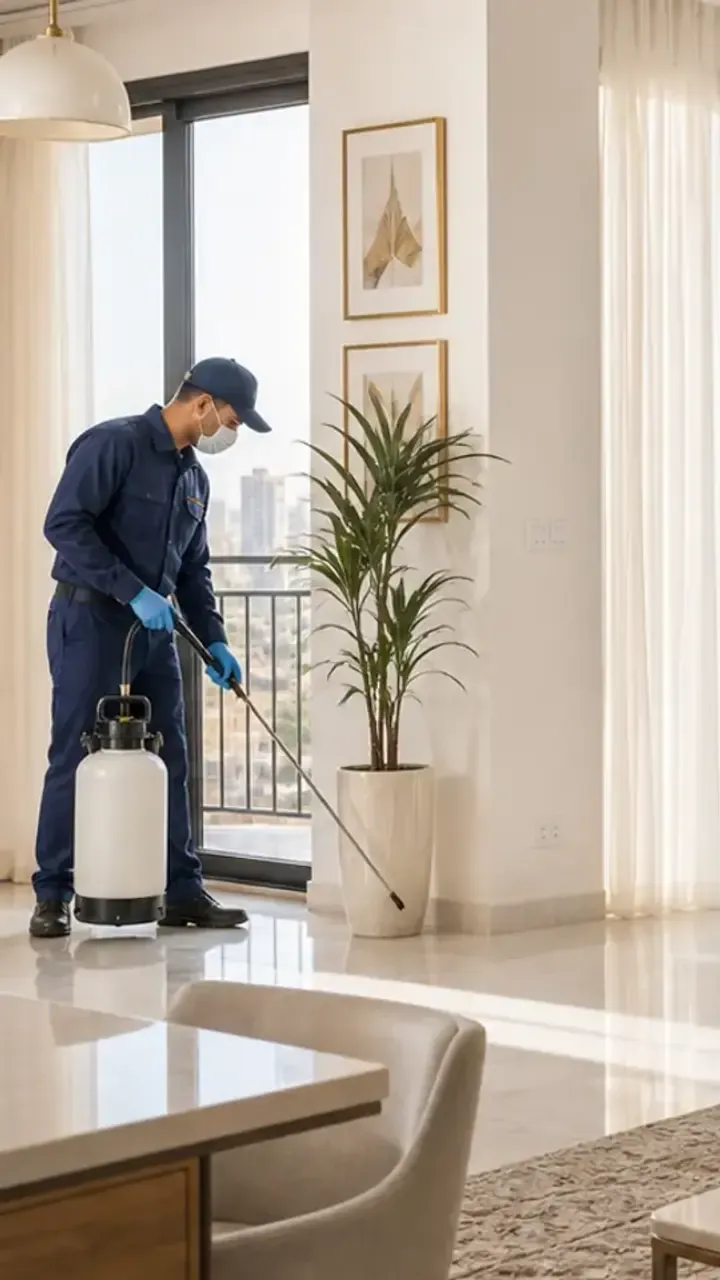
German Egypt Control technician carrying out rodent control The company’s Ministry of Health and Population licence Ministry of Health licenceLicence 32 · Reg. 90🔍 Tap to enlarge The company’s Ministry of Health and Population licence

Ministry of Health licence · Licence 32 · Reg. 90

We seal the entry points and secure the kitchen, not just leave poison in a corner.

Spot the problem early

Signs you have rats and mice

  • Small black droppings the size of a grain of rice or a little bigger, along walls or in kitchen drawers.
  • Chewed food packets or bread, or tooth marks on cables, wood and washing machine hoses.
  • Scratching or running sounds in a false ceiling or inside a wall, especially at night when the house is quiet.
  • A dark, greasy line on the wall near the floor. This is where the rodent's body rubs as it uses the same route every day.
  • A faint smell of ammonia in a storeroom or under the sink, which comes from rodent urine.
  • A pile of shredded paper or fabric in a hidden corner, which is usually a nest.

Where we usually find them:

  • Pipe openings
  • Kitchen
  • Storerooms
From the first call to the guarantee

How we get rid of rats and mice

  1. 1

    Inspecting entry points and runs

    The technician checks the kitchen, bathrooms, pipe openings, the gaps under doors, the light well, and the roof or garden, and works out where the rodent gets in and which route it takes.

  2. 2

    Sealing the gaps

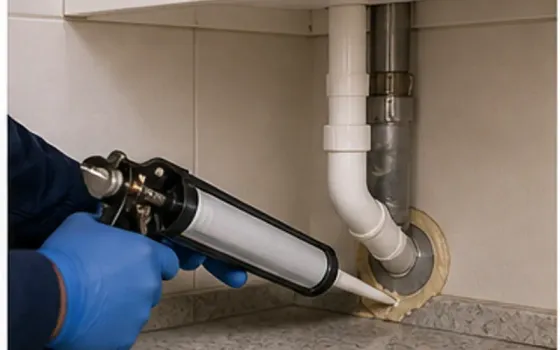
    We close the openings around water and drain pipes with materials rodents can't chew through, and point out any door or window that needs a small repair.

  3. 3

    Locked bait boxes and traps

    Bait goes inside locked boxes out of reach of children and cats. Inside kitchens and restaurants we prefer traps, so a rodent doesn't die somewhere hard to reach.

  4. 4

    Follow-up visit

    We come back to see how much bait has been eaten and what the traps have caught, and we move them if the rodent is avoiding them, until we're sure the activity has stopped.

  5. 5

    Written guarantee

    You receive a guarantee certificate stating the period and the type of service. If the activity returns within that period, we come back at no extra cost.

One number to remember

Call us…and leave the rest to us

A trained technician, Ministry of Health approved products and a written guarantee after the visit.

Where do rats and mice get in?

Most people ask this after they see the first one. The answer is usually a small gap nobody noticed: the space around the drain pipe under the sink, the air conditioning opening, the gap under the light well door, or a bathroom floor drain with no cover. A house mouse can squeeze through a hole roughly the width of a pencil. A large rat needs a bit more room, but not much.

In Egypt we mainly deal with three kinds. The small house mouse lives inside the kitchen and cupboards. The large sewer rat (the brown or Norway rat) comes up from drains, canals and farmland, and it digs and swims. The roof rat travels along rooftops, trees and cables, and it’s usually the one you hear above a false ceiling. Each uses a different route, which is why the inspection decides where the bait goes.

Why poison alone doesn’t solve the problem

Poison kills the rodent that eats it. But if the place has easy food and an open gap, another one moves in to take its place. That’s why people often say their rats have become used to the poison.

Large rats are also suspicious of anything new on their path. They may walk past bait for several days without touching it. If you put poison in a corner, wait two days and decide it doesn’t work, you probably didn’t give the rat a chance.

So our rodent control follows a set order. We seal the entry points first. Then we place bait in locked boxes along the route the rodent uses, and traps wherever we don’t want one to die. Then we come back and check. If the bait hasn’t been touched we change its position or type, and if it’s all gone we know there’s still activity.

Things that make it harder without you realising

The most common mistake is scattering loose poison pellets on the floor. A rodent may carry them off and store them elsewhere, and a child or cat might find them first. Some people seal a hole with cement or foam while the rodent is still inside, so it chews a new exit somewhere harder to reach, or dies inside the wall.

If you use glue traps, put them along the wall on the rodent’s path, not in the middle of the room, because rodents run close to walls. And don’t put bait next to open food, because the rodent will choose the easier meal.

Ground floors, villas and restaurants

Ground floor flats and basements are where we’re called most, because they sit close to inspection chambers and drains. Villas in 6th of October, Sheikh Zayed and the Fifth Settlement are a different story: a garden with plants and irrigation water, plus a power room or storeroom nobody opens. Rodents nest in the quiet spot and come into the house at night.

Restaurants and warehouses carry more risk, because one rat in the kitchen can spoil stock and cause trouble at an inspection. Here we place bait boxes around the outside of the building and traps inside, and leave you a sheet showing where every box is.

Watch out for digging work too. When the local authority replaces sewer pipes or a building goes up next door, rodents leave their old spot and look for a new one. Many people see their first rat a week or two after work like this.

When to call us

If you see droppings or hear movement, don’t wait until you see the animal itself. Rodents breed fast, and the one you spot in daylight usually has more hiding behind it.

Send us a photo of the droppings or the chewed spot on WhatsApp. From the photo the technician can usually tell a mouse from a rat, then book an inspection with you, and anywhere in Egypt we can come the same day. For a villa or restaurant, we give you the price after the inspection and before we start.

After the treatment: what to do

  • Keep food and bread in sealed containers, and don't leave cat or bird food out overnight.
  • Don't move or open the bait boxes. If one gets moved by accident, call us.
  • Keep the floor drain covered and the light well window closed, and take the rubbish out every day instead of leaving it in the kitchen overnight.
  • If you notice a bad smell a few days later, call us and we'll help you find the spot instead of you taking things apart on your own.

The price is set after the inspection

The cost of rodent control depends on the size of the property, how many entry points need sealing, whether there is a garden, storeroom or roof, and how many bait boxes and follow-up visits the case needs. We confirm the price after the inspection. We confirm the exact price before we start, and the inspection comes with no obligation.

After treatment you receive a guarantee certificate stating the period and the service, and if the problem returns within that period we come back at no extra cost.
A visit with us

From the first call to a good night’s sleep

  1. 1You call or WhatsApp usHi, I've got a rats and mice problem at home
  2. 2Booking confirmedService: Rodent control · Place: Villa · Inspection: Before any treatment
  3. 3The technician is on the waySame-day visits.
  4. 4The technician has arrivedIn company uniform, with all the equipment.
  5. 5Inspection firstWe identify the pest and its source before we start treatment.
  6. 6TreatmentTargeted extermination in and around pest nests · Ministry of Health approved products · Safe for children and pets
  7. 7A written guarantee in your handWe hand it to you before we leave.
  8. 8A quiet nightA clean home, without a single pest.

Your quiet day starts with a call.

Call or WhatsApp us and we’ll take it from there.

01066888859
Skip the story ↓↑ Back up
Ministry of Health licence for German Egypt Control

Licensed by the Ministry of Health, with the licence number right here

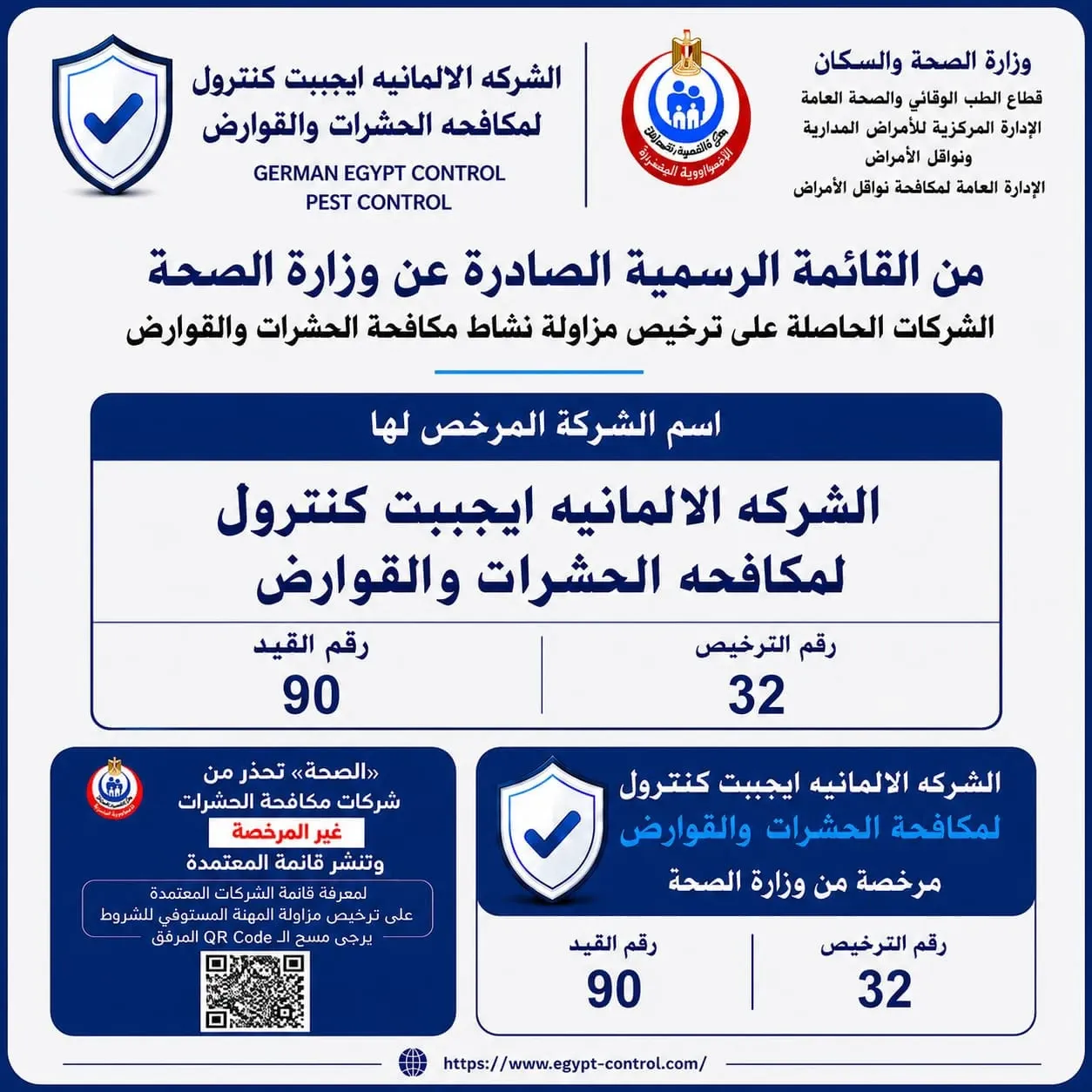
Our name is on the official list published by the Ministry of Health and Population of companies licensed for pest and rodent control. The Ministry itself warns against dealing with unlicensed companies, so always ask for the licence number before you let any company into your home.

Licensed company name

German Egypt Control Pest Control

الشركة الالمانية ايجيبت كنترول لمكافحة الحشرات والقوارض

Licence no.
32
Registration no.
90

General Department of Vector Control — Ministry of Health and Population

Ministry of Health and Population licence: German Egypt Control Pest Control, licence no. 32, registration no. 90 View the full-size licence
From the Ministry of Health's official list of companies licensed for pest and rodent control (in Arabic)
📞 Waiting for your call

One call…and the pests are gone

Call us now: an inspection first, then treatment with Ministry of Health approved products and a written guarantee.

Contact

German Egypt Control

01066888859

✓ Licensed by the Ministry of Health
Questions we hear a lot

Rodent control: frequently asked questions

We've gathered the questions we're asked most, with straight answers.

Still have a question?

Call or WhatsApp us and we'll answer right away.

Will a rat die inside the wall and leave a smell?

It can happen, but we keep the risk low. In kitchens and enclosed spaces we use traps instead of poison, and we place bait close to the entry points. If a smell does appear after treatment, call us. The technician will come back, find the spot with you, remove it and deal with the odour.

Is the poison safe if I have children or cats?

The bait is never left out in the open. It goes inside locked plastic boxes that a rodent can enter but a child or cat can't reach into, and the products are Ministry of Health approved. In homes with small children we use more traps and less bait indoors, and we show you every box before we leave.

Why do the rats come back after I put poison down?

Because poison only deals with the rodents already there, and the way they came in is still open, so a few weeks later others arrive through the same gap. Large rats are also wary of anything new on their route and may ignore bait for days. That's why sealing and follow-up matter more than the poison.

Do you work with restaurants and warehouses?

Yes, and they get a different plan from a home. We map bait boxes around the outside of the building, set traps inside food areas and record every follow-up visit. We can schedule visits after closing or before opening so work doesn't stop, and the paperwork is ready if an inspector calls.

🎁 Special limited-time offer - 35% off when you call us now

Ready to get rid of pests for good?

One call and we're on our way. An inspection, a clear quote and a written guarantee, in every governorate of Egypt.

  • Licensed by the Ministry of Health
  • Safe for children and pets
  • Written guarantee