


Ordinary ants: the problem is the colony, not the trail
The ants on your worktop are workers looking for food to take back to a colony hidden in a wall crack, under the tiles or in the garden. Kill that trail and the colony sends more tomorrow. That’s why so many people spray every day and get nowhere.
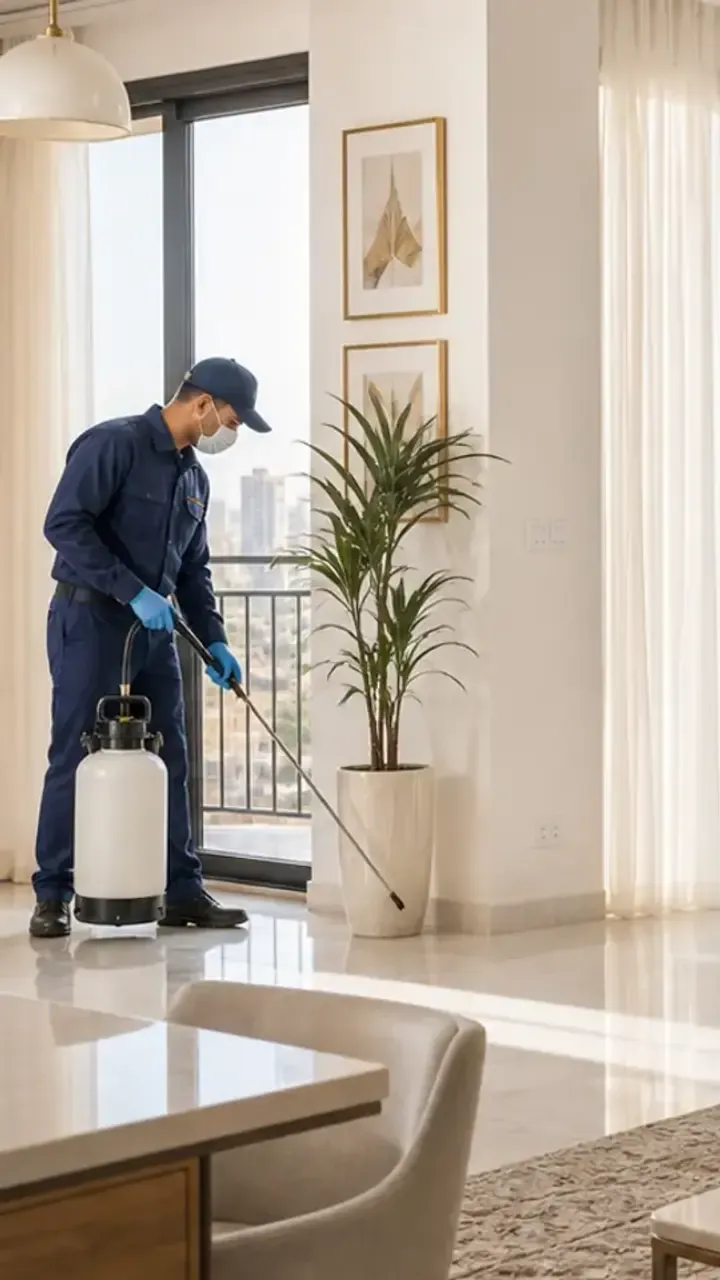
The fix is to let the workers carry the treatment back themselves. We put slow-acting bait on their route. They eat it, take it inside and feed it to the queen and the young. For the first few days you may see more ants around the bait, which means it’s working. After that the trails thin out until they disappear.
The tiny yellow ant (pharaoh ant) that turns up in bathrooms and electrical boxes needs more patience. Hit it with a strong insecticide and it splits, starting new colonies elsewhere. It’s one of the most common species we find in apartment buildings, and bait is the only treatment that works on it.
Termites: a wood problem, not a cleanliness problem
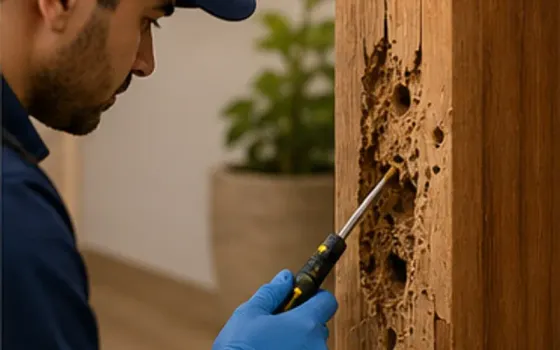
Despite the local name, termites aren’t really ants. They’re closer to cockroaches, and they eat the cellulose in wood, paper and cardboard. They live in the soil and reach wood through mud tubes that shield them from air and light. So you rarely see them. What you see is the damage: a crumbling door frame, sagging parquet, or a built-in wardrobe eaten from the back.
Termite treatment depends on finding where they get in. We inspect the foundations, walls, door frames and wooden floors, and follow the mud tubes until we reach the path. Then we inject a product into the soil and the openings around it, forming a barrier the termites can’t cross, and we treat the infested wood. Spraying the surface of the wood is a different thing altogether, and it never reaches the termites inside.
Villas, rural homes and Upper Egypt
We come across termites most in villas with gardens, in older houses with wooden roofs, and in villages and Upper Egypt where homes sit right next to farmland. Heavy garden irrigation and wood stored on the basement floor make their job easier. If a villa has a wooden pergola, benches or fence in the garden, that’s the first thing we check before going inside.
In newer compounds in 6th of October and New Cairo, an infestation sometimes starts from leftover formwork timber buried under the ground during construction. If you’re building or finishing a property, treating the soil before the tiles go down is easier and cheaper than treating after you move in.
Things that delay the treatment
With ants, the thing that most often ruins the bait is someone at home seeing the ants gathered on it and spraying it or wiping it with bleach. Bait needs days, and a crowd around it is a good sign. Chalk and powders sold for ants only change the trail’s direction. The colony stays where it is.
With termites, the most common mistake is replacing damaged wood with new wood without treatment. The termites find the new wood on the same path after a while. Some people break open the mud tubes and spray inside, so the termites build new ones somewhere else and we lose the evidence that would have led us to the path.
If you’re about to buy a ground floor flat or an older villa, ask for an inspection before you sign. It can save you a nasty surprise in the door frames and parquet after you move in.
When to call us straight away
Ordinary ants can wait a day or two, but send us a photo so we can identify them. If you see mud tubes on a wall, lots of shed wings by a window, or wood that crumbles, don’t wait. Termites work non-stop, and every month that passes means more wood to replace.
Call us or send a photo on WhatsApp. Anywhere in Egypt, the technician can come for an inspection the same day.
After the treatment: what to do
- Don't spray the ant trail once the bait is down. Let them feed and carry it to the colony for a few days.
- Wipe up sugar and juice spills on the worktop, and keep food and pet food in closed containers.
- Don't break the mud tubes before the inspection. Take a photo and send it to us, because they show us the termite path.
- Fix any water leak or damp in the walls or bathroom. Termites look for damp wood.
- Don't store wood or cardboard boxes against the walls in the basement or on the roof.
The price is set after the inspection
For ordinary ants the price depends on the area and how many places have trails. For termite treatment it depends on the length of the path that needs injecting, how much wood is affected, the type of flooring, and whether the property is a villa with a garden or a flat. We confirm the exact price before we start, and the inspection comes with no obligation.
After treatment you receive a guarantee certificate stating the period and the service, and if the problem returns within that period we come back at no extra cost.