
Where flies come from and why spray isn’t enough
House flies don’t breed in the air. They lay eggs on anything organic that’s rotting: rubbish in an open bag, food scraps at the bottom of a bin, farmyard manure in the garden, animal dung on a nearby farm or pen. The eggs hatch into small maggots, and the maggots turn into adult flies. In the summer heat this cycle is very fast, which is why fly numbers can double within a few days.
So if you have a lot of flies, there’s a breeding site near you. It might be the kitchen bin, the building’s rubbish room, or an empty plot next door where people dump waste. Sometimes it’s the villa garden itself after the gardener spreads manure on the surface, or an old tin of food scraps on the roof that nobody goes up to check.
Spray kills the fly it touches. But for every fly you see, there are maggots at the source that will emerge tomorrow. And spraying strong insecticide in the kitchen every day exposes your food and dishes to the product without solving anything.
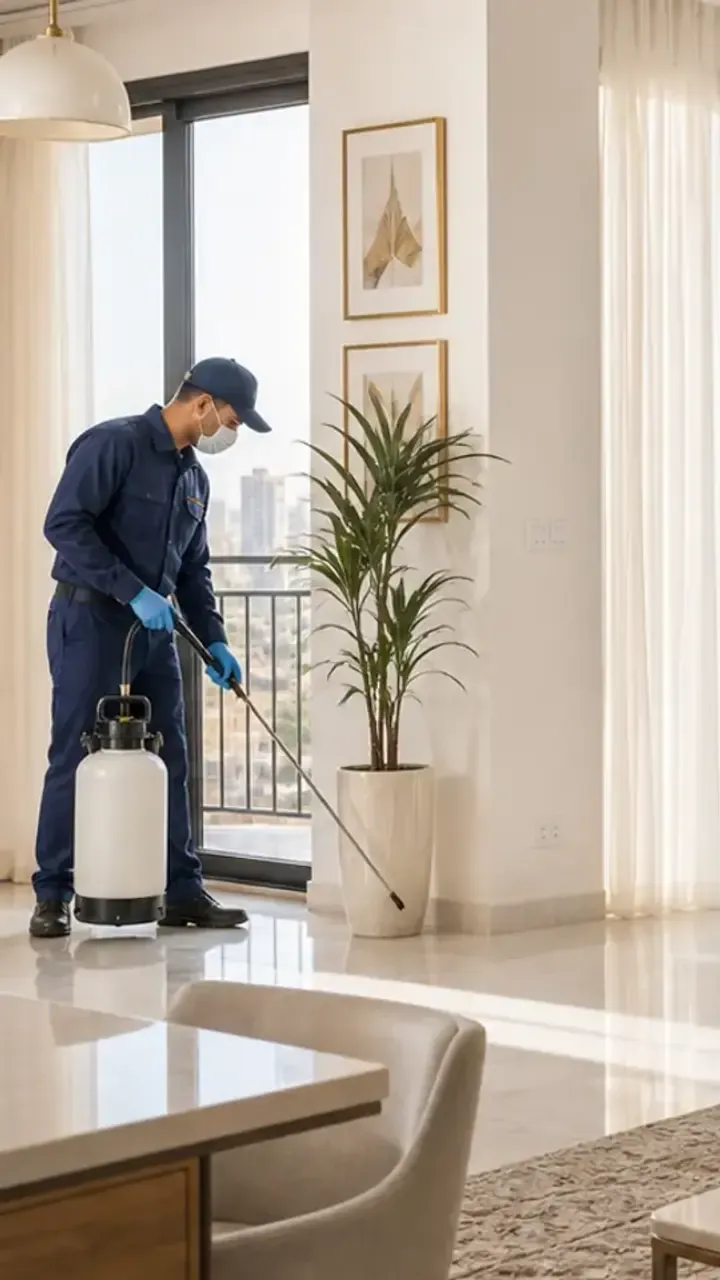
We split the work into two parts. The first is the source: we treat rubbish areas, manured soil and drains with products that stop the maggots developing, and tell you what to change in how you store rubbish. The second is the flies already inside the home or shop. We place fly bait where they gather and treat only the places they rest, such as the outside of window frames, corridor ceilings and the walls around the rubbish room. Flies land on these surfaces often, so they pick up the product without us going near food.
Restaurants, shops and juice bars
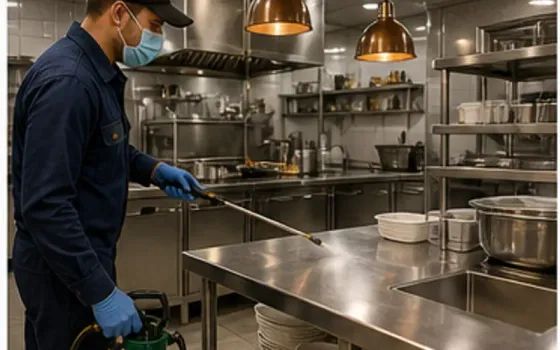
In a restaurant, flies aren’t just a nuisance. They affect your reputation and your inspections. Most restaurants have two sources: the rubbish at the back and the drains in the kitchen. We treat both and install light traps in carefully chosen spots, usually near entrances and in corridors, never above tables or food preparation areas.
Juice bars, fruit shops and sweet shops have a slightly different problem: small fruit flies. They breed in leftover juice, overripe fruit and drains. Fly control here starts with cleaning the source, followed by traps made for this species.
Villas, farms and homes next to farmland
Villas with large gardens in 6th of October, Sheikh Zayed and the Fifth Settlement suffer from flies in the fertilising seasons. So do homes next to farmland or livestock pens, because dung is a major breeding source. We can’t treat your neighbour’s land, but we treat your garden and surroundings, put a barrier at the entrances to the house, and tell you how to handle manure so it doesn’t become a new source.
If large shiny flies appear suddenly
We see this case often. Ordinary flies aren’t a problem, then suddenly large flies with a shiny blue or green colour appear in one room or the bathroom. These flies look for meat or a dead animal to lay eggs in. Usually a rat or bird has died in an air conditioning duct, a false ceiling or the light well.
Spraying won’t help until we find the source and remove it. The technician searches by smell and by where the flies gather, and if the source is a rat, we also check how it got in so the problem doesn’t repeat. If you find brown or white maggots crawling along the floor next to a wall, that’s the same signal.
When to call us
Call us if you see maggots in the bin, if the flies increase every day despite spraying, or if you run a restaurant and an inspection is coming up. Send a photo on WhatsApp of where the flies gather and another of the bin, and the technician will tell you what’s needed before he comes. Anywhere in Egypt, we can visit the same day.
After the treatment: what to do
- Keep the bin closed with a tight lid, change the bag every day in summer, and wash the bin itself from time to time.
- Don't leave pet food or food scraps on the balcony or in the garden.
- Repair torn window screens, and fit an air curtain or strip curtain on a restaurant's kitchen door.
- If you use farmyard manure in the garden, dig it into the soil instead of leaving it spread on top.
The price is set after the inspection
The cost of fly control depends on the type of property (home, restaurant, shop or farm), its size, the breeding source that needs treating, how many light traps are needed, and the number of follow-up visits. We confirm the exact price before we start, and the inspection comes with no obligation.
After treatment you receive a guarantee certificate stating the period and the service, and if the problem returns within that period we come back at no extra cost.