


Where ticks live in your home
Ticks are not insects. They are closer to spiders and have eight legs as adults. The one we meet most often in flats and villas is the brown dog tick, one of the few species that completes its whole life cycle indoors. The female feeds on the dog for several days until she swells up, then drops off and climbs the wall looking for a crack to lay her eggs in. That is why we find them behind picture frames, in the corners of the ceiling, under skirting boards and around door frames.
The eggs hatch into very small larvae, and each stage needs a blood meal before it can grow into the next one. Every time, the tick goes back to the animal, then drops off and hides again. This is why ticks return after the vet treats the dog: the whole reserve is still sitting in the cracks. In hot weather the cycle runs faster, so you will notice the problem growing in summer far more than in winter.
Treating the pet and the home together
The vet treats the animal and we treat the place. If both happen close together, the ticks on the pet die, the ones in the house die when they cross the treated surfaces, and the young that hatch later still meet an active product.
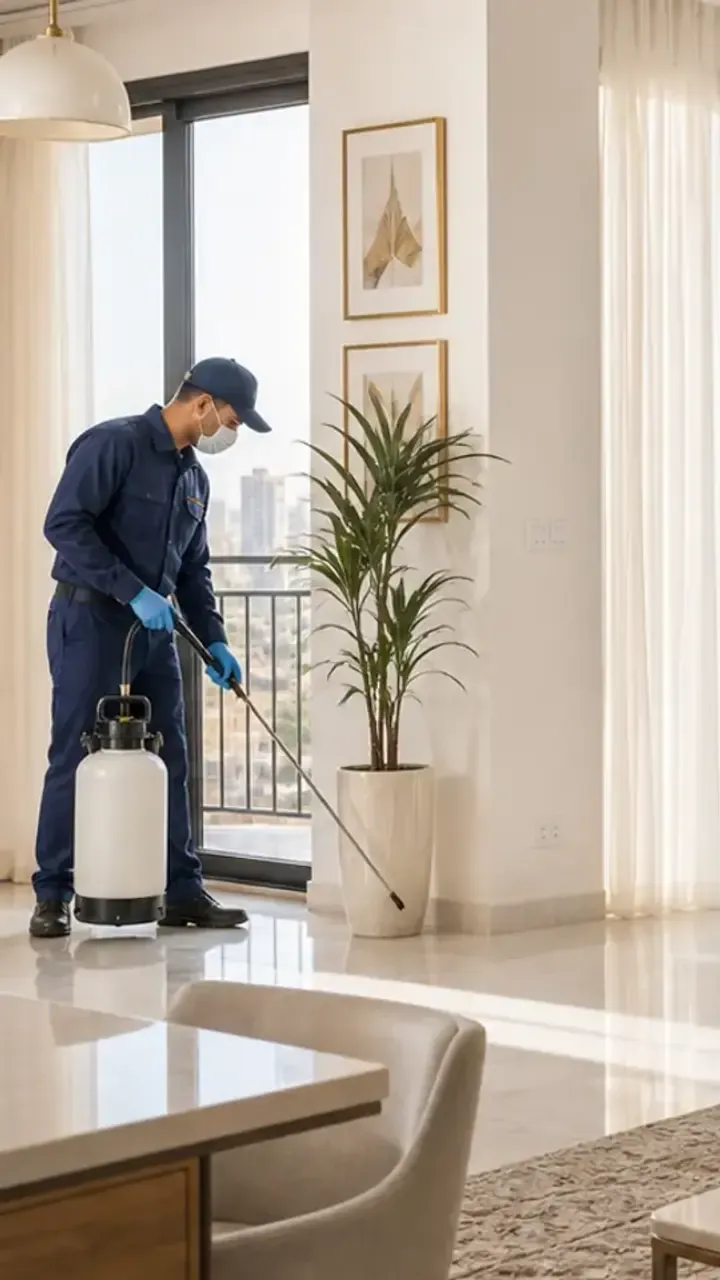
Our tick treatment concentrates on cracks and walls up to the ceiling, not only the floor. This is the difference between tick treatment that works and treatment that fails. Spraying only the floor and carpets misses the female who has climbed up to lay her eggs.
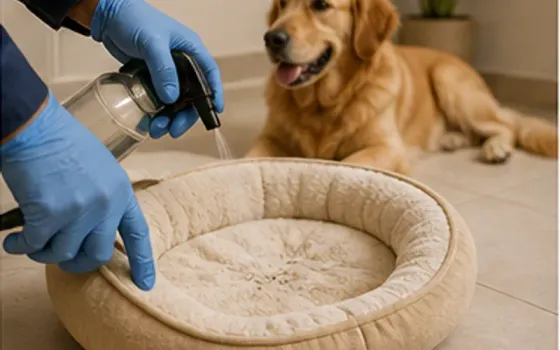
Before the visit we ask for a few simple things. Wash or throw away the pet’s bedding, and take down small frames from the wall next to where it sleeps. If you can, keep the animal out of the house during the treatment, either at the vet or with a relative. It can come back once the technician has finished and the product has fully dried on the walls and floor.
We return for a follow-up visit a few weeks later, because eggs are protected inside the cracks and some hatch after the first visit.
Roofs, pigeon lofts and chicken coops
In Egypt there is a second type we often see on rooftops: the bird tick. It is a soft, grey tick that lives in the cracks of pigeon lofts and chicken coops and in the wood and brick around them. It comes out at night to feed on the birds and stays hidden during the day.
The trouble usually starts when someone removes the coop or sells the birds. The ticks stay on the roof, hungry, looking for any source of blood, and sometimes come down through cracks in the ceiling into the flat below. Many people assume the bites are bed bugs or mosquitoes until they find a tick on the sheet. Here the treatment has to happen on the roof itself, in the coop area and its cracks, not just inside the flat. Don’t sweep the remains of the coop down the stairs or into the light well, because that moves the ticks somewhere new. Leave it until the technician has treated it and told you how to get rid of it safely.
Gardens, farms and livestock
In villas with a garden, dogs can pick up ticks from long grass and plants along the edges. We treat the areas where the animal rests and roams, and we will suggest cutting back long grass near the boundary wall.
On farms and in livestock sheds, ticks attach to the animals while they graze. In that case we treat the shed, the feeding troughs and the cracks, while the animals themselves are treated by the vet. Don’t try to pull ticks off an animal with bare hands. Wear gloves, and if you are bitten and feel unwell or feverish afterwards, see a doctor.
When to call us
Call us if the ticks came back on your pet after treatment, if you have seen ticks crawling on the wall, or if you are getting bitten at night and live below a roof with birds on it. Each female lays a large number of eggs, and the problem grows quickly in the heat. Send us a photo of the tick on WhatsApp so we can tell which type it is. Anywhere in Egypt, a technician can reach you the same day.
After the treatment: what to do
- Wash the pet's bedding and blanket in hot water, or throw them away if they are old and worn.
- Don't wipe the treated walls and corners with soap and water for a few days.
- Finish the course of treatment your vet prescribed, on schedule, and check the animal after every walk.
- If you find a tick on your skin, grip it with tweezers as close to the skin as possible and pull gently. Don't burn it or cover it with oil.
- If you get a fever or a rash after a tick bite, see a doctor straight away.
The price is set after the inspection
The price of tick control depends on the size of the home, whether there is a roof with bird coops or a garden to treat, the number of animals, how far the ticks have spread on the walls, and how many follow-up visits are needed. We confirm the exact price before we start, and the inspection comes with no obligation.
After treatment you receive a guarantee certificate stating the period and the service, and if the problem returns within that period we come back at no extra cost.